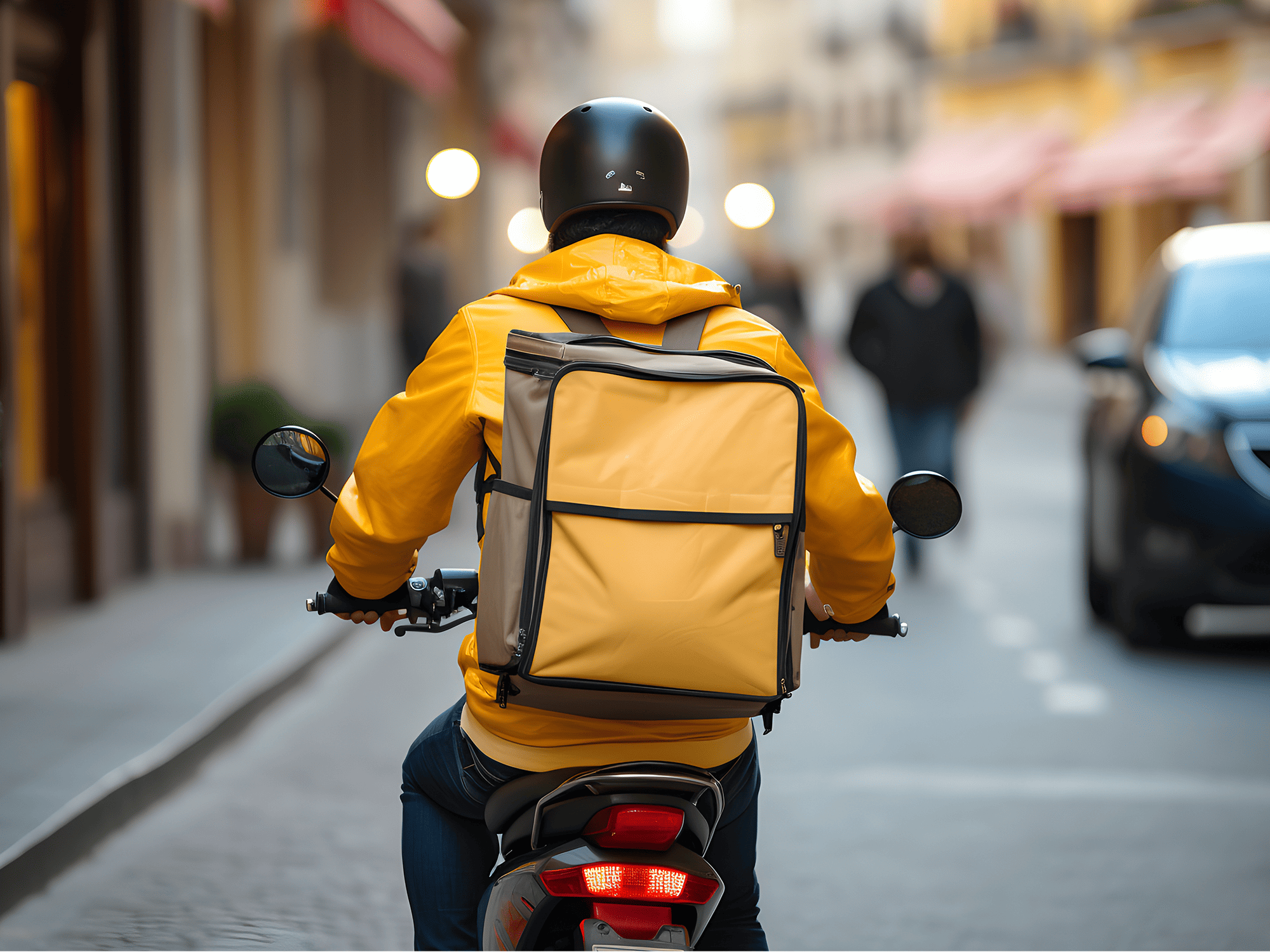
Two wheels are hard to beat for delivery work. The upfront costs of buying and fixing a moped or scooter is generally less, and the fuel economy can save you money, too. It's why so many riders across the UK choose a moped or scooter over a car when delivering food or small parcels.
But before you accept your first order, there's a bit of admin to get straight. Getting it wrong can mean a rejected application and a wasted afternoon, losing you money and time. Here's what you actually need:
The licence you need
What you can ride depends on your age and which licence you hold:
Compulsory Basic Training (CBT)
For most new riders, CBT is the starting point. It isn't a test you pass or fail. It's a day of training, and once you've completed it you can ride a bike up to 125cc with L plates.
A few things worth knowing: Your CBT certificate lasts two years, after which you'll need to retake it unless you've gone on to pass your full motorcycle test. You can't carry a passenger or use the motorway while riding on L plates.
If you already hold a full car licence
You'll still need CBT to ride a 125cc machine, but there's one exception. If you passed your car test before 1 February 2001, you already hold moped entitlement and can ride up to 50cc without doing CBT. Although generally speaking, it’s always worth completing up-to-date courses and training to ensure you don’t get yourself or others into trouble.
Going further
Passing the full motorcycle test removes the L plates, the two-year expiry and the 125cc ceiling. Plenty of delivery riders never bother, because a 125cc scooter handles urban delivery work perfectly well. If you're covering longer distances or planning to ride for years, it's worth the investment. And in the long run, it’s one less thing to worry about whilst doing this kind of work if it becomes your main source of income.
Moped, scooter or motorbike, what's the difference?
These names get used interchangeably, but they aren't the same thing:
- A moped is legally capped at 50cc with a top speed of 28mph. Fine for dense city centres, but slow going anywhere else.
- A scooter usually means a step-through 125cc machine. Automatic, easy to ride, and the default choice for most delivery riders.
- A motorbike is a geared machine, typically 125cc and up. More capable over distance, more to maintain, and more expensive to run.
For most people delivering in a town or city, a 125cc automatic scooter is the sensible starting point. It's cheap to run, easy to handle in stop-start traffic, and it won't require a full motorcycle test to get going.
Electric mopeds
Electric models are becoming a genuine option, particularly in cities with clean air charging. Running costs are lower, and there's no fuel to buy. Check the real-world range against the length of shift you plan to work, because manufacturer figures assume ideal conditions.
This could be a good option for drivers who don’t want to worry about fluctuating petrol costs and are currently riding electric push bikes.
What the delivery apps ask for
Each platform sets its own rules, and they can be subject to change. Before you commit to a vehicle, check the current requirements for the app you plan to work with. Most will want to see your driving licence or CBT certificate, your vehicle documents, and a valid insurance certificate showing hire and reward cover. Some also set limits on vehicle age or engine size.
If you're planning to work across more than one app, check all of them before you buy anything. It's much easier than discovering a mismatch after the fact.
The insurance bit
This is where new riders most often come unstuck;
Your standard motorbike or moped policy covers social, domestic and pleasure use (SD&P). That's your personal riding. The moment you're being paid to carry goods like food or parcels, that policy no longer applies, and you're riding uninsured for work.
What you need is hire and reward cover. It's a legal requirement for anyone transporting goods in return for payment, and every delivery platform will ask to see it. At INSHUR, our moped and scooter delivery insurance includes social, domestic and pleasure use as standard, so you're covered on your days off as well as on shift. You can choose a 30-day policy if you're testing the water, or an annual policy and save money over the year once you know delivery work suits you. One policy covers you across multiple delivery platforms, so you don't need a separate one for each app.
A checklist before your first shift
-
Sort your licence and CBT if you need one.
-
Choose a vehicle that matches both your licence entitlement and the requirements of the apps you want to work with.
-
Get hire and reward insurance in place and download your certificate.
-
Complete the delivery platform's onboarding and upload your documents.
Get those in order and the rest of it is just learning the roads.
Ready to get covered? Get a moped delivery insurance quote in minutes.
Frequently asked questions (FAQs)
Do I need a CBT to deliver food on a moped?
If you're riding a 125cc scooter or motorbike on a provisional licence, yes. If you're riding a 50cc moped and passed your car test before 1 February 2001, you already hold the entitlement and don't need one.
What can I ride with a CBT licence?
A motorcycle or scooter up to 125cc, with L plates displayed. You can't carry a passenger or ride on the motorway, and the certificate lasts two years before it needs retaking.
Can I use my motorbike insurance for delivery work?
No. A standard policy covers social, domestic and pleasure use only. Delivering goods for payment needs hire and reward cover, which is a legal requirement and something every delivery platform will check.
What's the best moped for delivery work?
There's no single answer, but a 125cc automatic scooter suits most urban delivery riders. It's inexpensive to run, easy to handle in traffic, and accessible on a CBT.
Do I need a separate policy for each delivery app?
Not with INSHUR. Our cover is multi-platform, so one policy covers you across Uber Eats, Deliveroo, Just Eat and others.
.png)